Jan . 01, 2026 04:00 Back to list
Installing Barbed Wire: Practical Tips & Trusted Products
Installing Barbed Wire: A Practical Guide from Industry Experience
Having spent a good chunk of my life around industrial fencing projects, I’ve learned that installing barbed wire isn't quite as straightforward as just unrolling and nailing it up. There’s a rhythm and method—and, frankly, a bit of art to doing it well. Whether you’re securing farmland, an industrial site, or even a remote compound, the details matter.
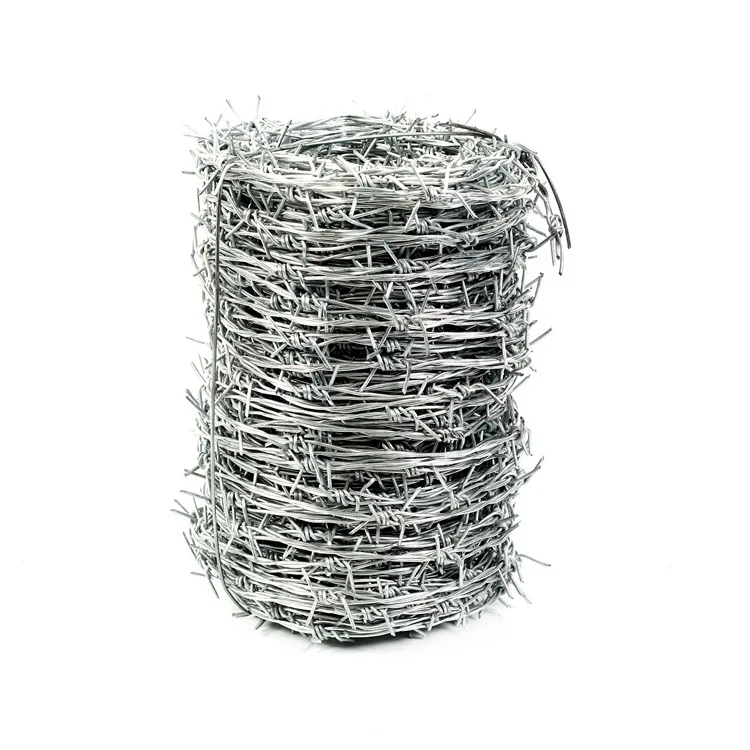
First off, the material quality is critical. Oddly enough, two strands of plain wire won’t perform the same as a properly galvanized barbed wire designed for resilience. I remember working a project where the barbed wire was delivered with a low-grade coating; rust appeared within months—definitely not what you want when you’re counting on a barrier to hold up to weather and potential intrusion.
You want wire that has been hot-dip galvanized, ideally with a zinc coating weight of at least 275 g/m². This kind of material means your fence stands up to corrosion and lasts for years without needing constant maintenance. Plus, the barb design itself varies by manufacturer, so it’s worth understanding what each offers. Smaller, sharper barbs tend to be more intimidating to intruders, but in some cases, larger barbs improve durability—trade-offs, you know?
Key Product Specifications for Barbed Wire
| Specification | Details |
|---|---|
| Wire Diameter | 2.0 - 2.5 mm (galvanized) |
| Barb Wire Gauge | 15 - 16 gauge (approx. 1.5 mm) |
| Material | High Carbon Steel, Hot-dip Galvanized |
| Spool Length | 500 - 600 meters (varies by vendor) |
| Zinc Coating Weight | 275 g/m² minimum |
| Breaking Strength | Up to 800 N/mm² |
When it comes to actually installing barbed wire, you really want to start with properly spaced posts—wooden or steel, depending on terrain and budget—and good tensioning tools. Many times on-site, I’ve seen installers underestimate the importance of tension. Loose wire sags, becomes ineffective, and creates weak points. You’ll want to use some come-alongs or wire stretchers, tools that some new folks tend to skip.
I once worked with a customer who insisted on using a cheaper wire with minimal galvanizing to cut costs. I warned them it might not last beyond a season, but they moved ahead. Sure enough, rust ate through the wire pretty quickly, and they had to replace the whole fence within the year. It’s a costly mistake that experience teaches us to avoid. Frankly, when it comes to fencing, the quality of your wire is non-negotiable.
Vendor Comparison: Barbed Wire Attributes
| Vendor | Wire Material Quality | Zinc Coating | Spool Length | Price per Meter | Lead Time |
|---|---|---|---|---|---|
| Yiszhe Wire Mesh | High Carbon Steel, Hot-dip galvanized | ≥ 275 g/m² | 500 m standard | Competitive | 2-3 weeks |
| Company A | Medium carbon steel, electro-galvanized | ~150 g/m² | 600 m | Lower | 1 week |
| Company B | Low carbon, hot-dip galvanized | ~200 g/m² | 500 m | Mid-range | 3-4 weeks |
It’s also worth mentioning customization options. Clients often ask for specific spool lengths or barb spacing, especially for agricultural needs versus security applications. The flexibility to tailor barbed wire to your situation can save both money and headaches down the line.
In real terms, the installation process often goes more smoothly when the installer respects the materials. Don’t just monkey around with the wire—use gloves, proper tools, and get the tension right. And while it may sound basic, properly anchoring the wire on corner posts and securing the ends prevents your fence from turning into a loose mess after a strong wind or animal brush.
To wrap it up, barbed wire remains one of the most cost-effective and reliable security measures out there. But, like with most industrial equipment, product quality, installation know-how, and vendor reliability all come together to make that fence last—and do the job.
If you want a place to start sourcing dependable product, I’ve found Yiszhe Wire Mesh to be a standout option with solid reviews in the industrial sector.
Oddly enough, even after years of installing fences, each job feels a little different—the right wire and careful installation do make all the difference.
References:
- Industry Guide to Fencing Materials, Fence Tech Journal, 2022
- Corrosion Resistance in Barbed Wire, Materials Science Today, 2021
- Personal Experience, Industrial Installation Projects (2010–2023)
-
Hydraulic Hose Ferrule Fittings - Hebei Yisizhe Manufacture (Group) Limited
NewsFeb.27,2026
-
Comprehensive Guide to Flat Wrap Razor Wire Security and Applications
NewsFeb.24,2026
-
Secure Your Property with High Quality Concertina Razor Wire for Sale
NewsFeb.11,2026
-
Comprehensive Guide to Jail Barbed Wire Security and Applications
NewsJan.30,2026
-
Effective Barbed Wire for Goats A Comprehensive Guide to Safe Containment
NewsJan.27,2026
-
Barbed Wire Garden: Industrial Fencing Solutions
NewsJan.25,2026